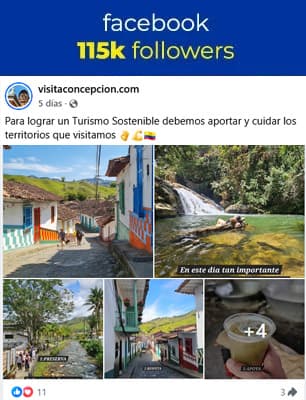
Among the green mountains of northeastern Antioquia lies a historic paradise almost ignored by mass tourism plans:
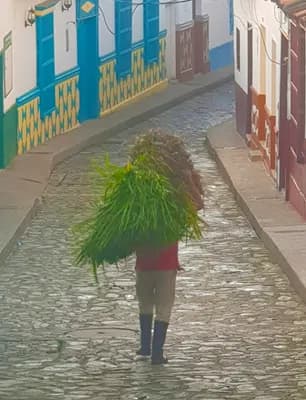
Concepción! It is a small town so charming and "divine" (as they say in Colombia) that since 1999 it has been declared a National Historical Heritage site due to its cobblestone streets and impeccable preservation. It is a small and secluded municipality (1875 meters above sea level with just over 1,500 inhabitants in the main town), forgotten by cars and modern technologies. This remote gem can only be reached by traveling unpaved roads. Getting lost is practically impossible since its narrow, cobbled streets lead to the same place: the iconic central plaza. Additionally, a small river with crystal-clear waters, countless guava trees, and guayacanes add to the beautiful natural surroundings.
Although the first nomadic inhabitants were the Tahamí and Caribe indigenous peoples, it was only at the end of the 1770s that miners from the city of Santa Fe de Antioquia (including the founders Don Diego Córdoba and Pedro Valencia), attracted by Concepción’s gold wealth, settled in the area and opened a mining operation that earned the status of Royal Mines. The parish was created on November 6, 1770, by decree of Doctor Juan Salvador de Villa y Castañeda, priest of Medellín and Vicar Superintendent of the Province of Antioquia, under a commission entrusted to the Bishop of Popayán, Don Jerónimo Antonio de Obregón y Mena. The settlement was elevated to the status of municipality in 1814, and since 1885 its inhabitants began focusing on livestock, timber, and agriculture.